
Not Your Mama's Marketing
 11:41 AM
Edit Post
 Recently, I spoke to a group of marketing executives about customer experience management (CEM). After going through definitions, fundamentals and pitfalls, we started talking about what CEM really, practically means to the marketer.
To make a critical point, I asked the group, "When was the last time your marketing plan looked like this:"
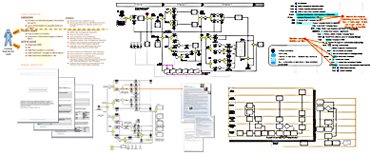
I talked about segmentation and customer persona development and how good strategies align customer segments with quantifiable goals and metrics. We touched upon the subject of customer experience mapping, which establishes and aligns multiple marketing campaigns to ensure customers don't "fall through the cracks" at any point in the journey to brand discovery. We talked about the importance of requirements documentation, project planning and business process alignment in campaign planning and execution. As we reviewed the planning process, we also addressed the importance of periodic reality-checks that ensure the segments, goals and metrics originally created align with the campaigns that are actually being developed.
There were a lot of gaping stares and the discussion triggered many desperate attempts to get copies of my slides. The group's response was extremely telling, reinforcing my assertion that many marketers are today, very desperate for tools that will allow them to better create and manage customer experience today.
Today's marketing just isn't the same as it was in the hay day of your grandmother. Heck, it 'aint your momma's marketing, either. Today, the whole face of marketing has changed, and if your organization hasn't adjusted its tack significantly, you should be concerned.
Today's leading companies recognize, support and develop the role of marketing in rallying the organization around a central vision for customer experience. Marketers today must know how to successfully interface and coordinate the activities of a broad spectrum of players, from typical agencies and service partners through to a multitude of internal players including product development, customer service and technology.
These companies recognize that marketing's ability to be successful in this role is dependent on crediblity. Marketing credibility is dependent on skills and proficiency, organization and clearly defined process. It's also critically dependent on marketing's ability to understand the needs, pressures and priorities of internal departments.
Supporting the marketing department positioned to do this requires very strong top-down coordination and leadership - that doesn't just come from the CMO or VP of Marketing level. Organizational alignment in the executive ranks must be created by C-level leadership. Now, the management dynamics required to make this happen are certainly complex. In fact, in most organizations, customer centricity is damaged by leaders that fail to coordinate departmental activity in a synergistic way. As a result, departments be come so silo-driven and task focused that the organization misses key collaborative goals for the business. And this shows to investors in the end.
I won't get too focused on the types of documents reflected above, because focusing too much on TASKS can take your eyes off of what's MOST important. If I had a dime for every client claiming they wanted to be customer centric, I'd be a rich woman. The reality is, all the planning referenced above has got to be created based on a clearly articulated vision of what prospects and customers need and want. The organization has to be rallied around - and measured against - the delivery of this vision.
We'll talk more later about some tools that can help with CEM creation and management... stay tuned.

The Vicarious Experience
10:12 AM
Edit Post
 I spoke on the subject of Customer Experience Management at the annual Marketing Profs retreat a few weeks ago. We talked alot about the concept I've been promoting for a few years called the "three word rule" and went through a list of brands that really understand the rule and how to apply it. Later on, the subject of Volvo came up, and unilaterally the one word that came up was "safety." Now, that's brand equity.
Volkswagen is now getting into the safety game with its "Safe Happens" campaign - and they're doing it with highly compelling advertising approach. Created by ad agency, Crispin & Porter, the ads feature every day people - much like yourself - experiencing car accidents. If you're paying attention, the ads drag you right into the accident in a participant's capacity.... and you'll vicariously experience the accident with the actors in the commercial. You'll also join in their relief that no one is hurt. It's very effective.
View a few of the ads by clicking here or here.
What Crispin and Porter are playing off of is the power of the vicarious experience. For example, we all know gossip and bad news are viral. What's important to remember is that customers that have a bad experience with your brand may enable others to vicariously experience the event through word-of-mouth.
I recently had a talk with a friend who likened waiting for help at the Apple Store to "waiting to be noticed by the cool kids in school." While she didn't like the experience much, she admitted she could not help but notice her desire to "be one of them." Cool by association, courtesy of the vicarious experience dynamic.
Vicarious experiences invite others to participate and engage the senses and the emotions. They motivate people to change, react, consider in a more tangible way. There's something to be learned for all of us in these examples.

Marketing Profs: Finders Keepers Review
12:26 AM
Edit Post
 I just got back - well actually I got back Sunday but am just catching up now - from speaking at the Marketing Prof's Finder's Keepers 2006 Executive Retreat I spoke for a little over an hour and a half (all of it was sanctioned time!) on the subject of customer experience. I also provided several real life examples from companies like Best Buy, Jet Blue, Medtronic, Converse and other companies.
Now, Marketing Profs retreats are not like your average conference... First, this one was set in sunny Santa Barbara in an enchanting Bed and Breakfast with very cushy beds and deep soaking tubs. Second, the signature authors who spoke at the conference (Subject: finding prospects; keeping customers) stuck around for the entire two days to mingle with folks like you, giving free advice, listening hard and even learning a thing or two. Third, there were no vendors!!!
All tolled, there was an illuminating mix of companies at the conference, which ranged from large, high tech companies to small and mid-sized businesses. Here are some of the quotes I heard from the attendees:
"This is like the Bill Maher of Marketing Conferences. Lots of crossfire from the experts and great insight."If you missed out, I hope you'll look through the archives to find great insight from our speakers, like William Arruda (the smiling, world traveler) on Branding, Jonathan Kranz (looks like a kid - wise like an old guy) on copy writing; Jim Lenskold (way smart numbers guy with the skinny on Marketing ROI ), Jill Griffin (a southern belle with great customer loyalty chops) and many others.
"I've been to 'em all - Marketing Sherpa, DMA, you name it. I've learned more in the first four hours of this conference than all of them combined."
"Excellent. I was impressed with the high quality speakers. I'd come again next year, for sure."
It wasn't just the attendees that had a good time. We authors enjoyed meeting the Marketing Profs staff - who are (honestly) all fun, impressive, intelligent people who bring the "A" game, as well as the readers of the Marketing Profs web site. If you missed out, we hope you'll consider attending the next retreat - and I certainly hope to be there again!
Experience Engagement Ring Shopping
4:52 PM
Edit Post
 For those of you zinging me about a lack of posts, I apologize. I've been a bit distracted lately -- I got engaged last weekend and I think my head is still spinning from it all! The best way to describe the feeling is that of dizzying joy. My current state of mind, however, is a bit "spaced out."
Over the past month... at the instruction of my fiancee, I looked for rings in an attempt to find a setting I liked. We're in the unfortunate position of being in different states which made coordination a challenge. After a few visits to some jewelers, I promised myself I'd write about the experience! Talk about an industry that could use some improvement! Let's use this as a parallel:
Imagine that you are interested in buying a car. You head into a dealership and find that the showroom is filled with a lineup of miniature models that are more economical to produce and save floor space. In the minature show room, you do get to see a 3D version of the car, but you can't sit in one because your butt won't fit in the seat. You can't drive it because some of the features aren't real. The salesman argues that the mini versions still give you the idea of what the car is like, but you don't know really how it fits you and you're left feeling dissatisfied.If car shopping were like this, how much would it motivate you to purchase?
While you're kicking the tires, you lift the hood of the car, but instead of an engine, there's either a gaping hole, a picture of an engine, or a cheap, plastic model of an engine in its place. You're asked to imagine the real thing - but you can't start it up and hear it purr yourself.
Say you're still interested in the car - but you want a different available model. In response, they show you a printed catalog with a photo. The dealership then proceeds to tell you that they'd be happy to order it for you at your expense, and if it doesn't work out, you can exchange it for another car. Uhhh. Yah.
This is the equivilant of modern-day engagement ring shopping, for me. If you think about the parallel, it's really not too far off - especially considering the cost of the investment one makes when purchasing a ring.
Mini modeling.... Let me be clear: I don't have giganto man hands or chubby fingers. I'm a size 7, which I'm told is quite average. However, after visiting more than seven stores and being forced to cram rings over my throbbing knuckle ... after removing wedged on rings with windex (which actually became my best friend) and listening to every jeweler tell me "Yeah, I don't know why they don't send us larger sizes! People complain about this alot"... I find it ludicrous that the jewelry manufacturers send most sample rings in size six!
I was interested in how the ring felt on: Was it to chunky? Would it roll? Did it sit nicely on my finger... etc. You can't tell this when it's on your pinky finger. All tolled, the size of the ring had a decided impact on my comfort level with a setting. This is especially true when one considers that changing the size of a ring can also change look of the setting entirely, and may require stone size adjustments.
While the jewelers offered to order a display ring in my size - or any other ring in their print catalogs, their assumption was that my fiancee would pay for the special order. They explained that if we were dissatisfied with the setting, we could simply exchange the ring for another one. Frankly, that seemed like a ludicrous thing to ask, and I didn't want to be exchanging a ring my love had generously gotten for me!
As for the gaping hole and picture of the engine... Trying on a setting with no diamond in it just doesn't work, folks. Even if the jewler "tweezes" a stone and holds it over the setting for you. How can you possibly know if you like a ring unless all the stones are set and you look at it from multiple angles. Sticking a CZ or two in the ring is better than nothing - although it's not quite the same to the discering eye. In the end, it would seem to me that showing the rings with very good quality diamonds would be the place to start for selling the merchandise, but I suppose I'm being an idealist.
Departing from the car parallel, one other thing that irked me about the process- and that was the almost total disconnect between the web sites of these major (and minor) jewelers and the in-store experience. It would seem intuitive that the future bride would be able to select settings and have the jeweler email an "info sheet" (or link to a web page with pricing and options) to the future groom. It would seem intuitive that the jewelers would help facilitate the transaction in some way. But nooo. Half the rings that were displayed in the store weren't on the web site -- and vice versa. Some jewelers weren't willing to give me stock numbers and manufacturer information of the rings. EGAD!
Now, I'm sure there's some economics that go into these dynamics. For example, the practice of sending smaller samples into the stores. Obviously, the smaller the ring, the less metal there is - and the bigger the diamonds look. However, the economics at play may well be costing some jewelers very good sales, today.
The national and regional jewelers we visited lost my ever diligent and extremely patient fiancee's business because they made us jump through WAY too many hurdles. They showed us too many rings, overwhelmed us with a lot of detail, made us use our imagination to the point where our heads hurt, and made us want to go away - not stay and make a choice.
In the end, the jeweler we liked best was a small, family-owned high end jeweler that had about four cases full of beautiful, carefully selected rings. Every ring was displayed with stones - all of them were lovely. The staff was laid back and extremely friendly, and they were great about outlining pricing to my fiancee in a discrete manner. They didn't preach at us, but educated us when we asked about the rings and stones. They helped make us aware of many considerations of the purchase and gave us managable options that made us want to do business with them.
In the end, I picked my setting, he picked the stones and we got a lovely ring that he put on my finger the day before easter on a bridge over the Big Sioux river. I must say, as bad as engagement ring shopping can be, there's simply NOTHING that could rob me of the joy of doing this with soon-to-be husband. After all, I got the REAL prize when I met him... and that's kind of the point of it all. :-)
I just thought the experience of the ring shopping was worth mentioning. Maybe some smart jewelers will change things up a bit and see if store conversions rise as a result! As we plan our wedding, I'm sure there will be more fun stories emerging. But heck, maybe I'll avoid some of those pitfalls and just get married on a beach somewhere! Stay tuned!
Would you pay premium for commercial free TV?
11:40 AM
Edit Post
 iTunes offers downloads of popular television shows for $1.99. I love them because they're easy to skip through and free of annoying commercials. I can watch them any time I want on the laptop, which comes in handy during three hour layovers in places like Chicago. ABC's popular hit show "Lost" is my personal favorite... it's almost always in the iTunes top download category.
ABC recently announced that it will offer free downloads of select programming, including "Lost". The catch? Non-skippable commercials.
And so I ask... How much are you willing to pay for commercial-free television programming? I dunno … To me, the buck ninety nine to forego them seems worth it.
So, you don't download? Perhaps maybe you think this doesn't apply to you? Well, as the lines between our computer networks and TV become blurred, the model may well apply to you in the future!
Commercial skipping and freedom of choice were a big reason why I bought a TIVO six years ago - that, as well as the ability to watch what I want, when I want. It's the way things should be!
There will always be a market for on-demand, full choice programming. It's what the majority of people really want. Sony/TIVO gets this, and as an emerging media company, Apple also recognizes and responds to this. The networks and the advertisers, on the other hand hate what's going on and seem to be fighting it using the methods below to deal with next-generation advertising:
1. The industry is working on technologies that will limit our ability to skip commercial advertisements for DVRs and the web. While this is likely to make the advertisers very happy, it will inevitably alienate the people who have invested in choice enabling technology. In the end, this approach is not likely to work out very well for anyone.
2. They're becoming more intelligent about careful advertising sponsorships. Today, it's almost expected to see Oprah or Dr. Phil giving away everything but the kitchen sink. ABC partners with Sears give away new homes stocked with high end appliances to people in need on "Extreme Makeover: Home Edition." It not only works for the advertisers - it works for the people watching, who feel better by association. It's a win-win.
3. They're getting more aggressive about embedded and interactive advertising. This is the new frontier in advertising really, although the principal has been around for years. E.g. How often do you see that Coke can sitting on the table in popular TV shows and movies? They may as well shape the stage of "American Idol" with a coke bottle... Embedded advertising is beginning to morph into a less subtle form. We're beginning to see the networks using non-skippable embedded ads that comprise all or part of the lower 1/5th of a screen. I saw one for "Swiffer" the other day. It was an annoying animated ad that appeared during live programming and was incredibly distracting. It certainly failed to contribute to positive brand association for me. Interruptive advertising isn't likely to enhance the television experience in the long run - and it's archaic compared to the possibilities offered by new technologies that can make embedded ads and sponsorships even better - and maybe more effective.
For example, if you've got a DVR, you're likely to find embedded advertisements and programming in various menu areas. It's also becoming more common to find interactive icons that display during commercials which invite you to "learn more". If your DVR is connected to your network, you'll have even more options. Individuals can download and participate in games, contests, promotions right from the TV. So far, the execution in these areas isn't real compelling. Heck - Nielsen just added DVR viewership to its rankings, so that's not surprising. So, there's still a lot of work to be done in this arena of advertising. The big challenge for advertisers addressing the new paradigms will be making embedded advertisements and promotions visible and compelling --> yet less interruptive and annoying.
It will be interesting to see this all shake out... just how much people are willing to pay - just how far they're willing to go - for commercial free programming remains to be seen.
What's the lesson for those in the biz? The customer rules! TIVO and Apple have gained a tremendous fan base by acknowledging the consumer's need for choice and flexibility. The networks often work against this dynamic and fail to leverage new technologies effectively to create really compelling "packages" for consumers. As a result, they simply have viewers.
In reality, many of us have been paying for commercial free programming for years - on pay channels like HBO, Cinemax and others. The times they are a changing, however. Watch HBO today and you're likely to see plenty of commercials between movies - from network promotions, ads for upcoming programming and "making of" film trailers and coming soon promotions for new films (on the network or in the theater). Furthermore, getting movies is now so cheap and easy, many viewers simply don't need those channels as much (unless you're addicted to HBO programming like "The Sopranos"). We can pretty much watch movies any time we want with on-demand programming, our own home DVD collections, Blockbuster or Netflix.
As things change, what's most important as the media companies pioneer the advertising and sponsorship models that drive modern day television programming is customer centricity. Sears and ABC understand that people want to feel good - and they leveraged the heck out of it (along with other advertisers) to create Extreme Makeover: Home Edition. But they still haven't figured it out entirely. On the other hand, ABC has a pretty sophisticated advertising model on all their sites - which makes advertisements extremely overt. While this works for the advertisers, it's also exceedingly annoying for the consumer, as ads are displayed on or before almost every page of the site. Contrast ABC's advertising model with say, VH1.com to note the real difference!
My thought on commercials, television and choice: Find a way to give the people what they want, and do it with style and creativity better than the competition. Putting people first will yield a fan base that allows you to charge your advertisers (and, if they're willing to pay, your customers) a premium price that will push you ahead of the pack. :-)
Meet & Greet at the Marketing Profs Spring Retreat!
9:44 AM
Edit Post
 So, the posts are light right now because I'm traveling again, and will be next week, as well, but here's a little tidbit/reminder for regular readers:
Next week, I'm excited to be presenting at the Marketing Prof's 2006 Annual spring retreat April 20-21 in Santa Barbara. This year's topic is "Finding Prospects & Keeping Customers."
You should know is that the team at Marketing Profs retreats aren't interested in hosting your average meeting. Here's why this Spring retreat is truly unique:
You'll find us in a beautiful B&B by the sea in Santa Barbara It's limited to only 50 earnest and interesting marketing professionals You'll hear eight presenters who'll remain available during the retreat to dialog with you!
SO --> Two days of stimulating discourse, riveting interaction, hanging out with smart, cool people (I aspire to be cool by association) and the beach! Sure beats your typical conference, right? Also, did I mention there will be no vendors?
There's a lot of cheap airfare right now! Maybe you should think about coming! Get the details and download the event brochure now to read about the agenda, the speakers, the location, and more. If you're interested in attending, I recommend you hurry! Only a handful of seats are left.
One more thing - Marketing Profs is offering a gift with registration if you sign up for the retreat by Friday, April 14th. They'll give you a $199 Premium Plus membership - or a whole year of access to ALL of the Premium content that MarketingProfs publishes, including our popular virtual seminars. And that's a lot of know-how for free!
Hope to see you there!
MTV Networks and the Power of Multichannel Branding
9:15 AM
Edit Post
 Check out this interesting article in Mediaweek, “MTV Networks Coins New Sales Metric For The Upfront.”
The skinny: MTV Networks has conducted a study which proves multichannel/multiplatform brands have a higher level of “transference” (or positive brand association for advertisers) than brands that are promoted within a single channel.
Okay, so those of us engaged in customer experience already understand the power of multi channel experience, and it’s clear that MTV Networks understands how to leverage the power of multi channel branding. From VHI to Comedy Central, Nickelodeon to CMT, it has become standard to leverage the web and wireless channels for exclusive content that promises to more closely tie the viewer in with television content.
Viewers of just about any MTV Network program can click for more content and show stopping interaction: obtain episode guides, view exclusive (and uncensored) footage, preview upcoming shows, read cast member commentary, find out what happened “after the show”, provide feedback, interact with other viewers, play games, enter into contests or sweepstakes, buy merchandise, download ring tones, screen savers and much more. Then there’s the wireless presence… I was amused to find the latest clips from “The Flavor of Love” from VH1’s Celebreality on my Sprint PowerVision test phone. VH1 hosts the “VCast,” a daily, wireless broadcast of new and popular music, sponsored by Verizon.
In in MTV Network’s case the residual call for advertisers is this: “You can be cool by association!” Why not, if it works? You might even learn a thing or two. There’s a bigger lesson to be learned related to multichannel marketing: Affinity brands understand how to create a seamless experience across channels and across platforms in a manner that builds and reinforces customer loyalty. Whether you’re piggy backing on the success of a television program or network, or configuring your own experience across your own channels, plotting out the cross-channel experience is a necessary skill in this on-demand era.
...and we’ve got to be able to better measure the results!
What’s interesting about the MTV Networks study is that the Mediaweek article cites no link to the study or figures that illustrate how the transference metric is derived. Further, while this intuitively may ring true to folks "in the know", there really are no statistics that show the difference between transference rates for single and multi-channel advertising campaigns. I combed the press releases and MTV Networks site looking for the study and was unable to locate it. It occurs to me that MTV may want to keep this information proprietary. However, if you have managed to get your hot little hands on this study data, please send it my way or leave a comment here.
All tolled, in a world where the metrics we use are commonly insufficient, it’d be nice to see more true “case studies” that illustrate how leaders are measuring quality, experience, loyalty… and new measures like transference and engagement mentioned in this article.
Reading: The Value of a Marketing MBA
9:25 PM
Edit Post
 There's been all kinds of trash talk about whether the modern day graduate with an MBA is worth his or her salt. Last week's article in Ad Age" adds fuel to the fire, much to the chagrin of American Universities. The article, entitled "M.B.A.'s May be a Marketing Liability" highlights a recent survey of 22 consumer products companies, including General Mills, Post, Nestle, Pfizer, Hazbro and others. It also used scanner and panel data from VNU’s ACNielsen.
In short, the study shows that marketers from companies with significant market-share gains are far less likely to have M.B.A.s than those from companies posting significant share losses. Further, the study shows that marketing executives from underperforming companies were twice as likely to have been recruited out of M.B.A. programs than marketing executives from out-performing companies.
The article is worth a read, and here are a few more highlights (as quoted or as summarized from the article):
In a consumer driven society, we need people who understand business and think like customers … people who understand how to create comprehensive, measurable user experiences that drive solid results.In underperforming companies 90% of executives had MBA degrees vs. 55% in outperforming companies. The out-performers in the survey got about a fifth of their marketing executives from undergraduate programs and another fifth from advertising or marketing agencies or other industry vendors. None of the executives from underperformers had been recruited as undergrads and only 5% came from agencies or suppliers. Out-performers averaged one marketing executive for every $37.9 million in sales, compared to one for every $28.5 million in sales at the underperformers. Staffing levels were also higher at companies with a high level of marketing outsourcing. Out-performers in the survey placed a much higher value on personal and professional development once they hire people. The survey showed the share winners far more likely than the losers to support attendance at industry conferences and seminars, involvement in industry associations and peer-share groups, internal training groups, formal mentoring programs and graduate-level seminars.
The article indicates there's a strong benefit in hiring individuals with practical, hands-on experience and maturity... especially in competitive markets. As product commoditization places an increasing emphasis on the comprehensive customer experience, we’re also seeing increasing demand for individuals who understand cross-channel experience management, integrated marketing, interaction design, usability, cultural ethnography, analytics and more.
What’s your opinion of the modern day M.B.A.? When you look at the performance of individuals possessing an M.B.A. degree vs. other individuals in comparable positions, do you find anything that's missing? What qualities are most important as you consider hiring innovative, seasoned professionals? Weigh in by leaving a comment!
The Drug Store Experience
3:16 PM
Edit Post
 We're living in an era with a rapidly aging majority, and a culture that has become increasingly dependent on medical science and pharmaceutical support. Here in the U.S., we're bombarded with hundreds of embedded messages, ads, commercials for drugs promising us a stronger, healthier, more virile, low-risk, pain-free experience.
As prescription and OTC drugs play an increasing role in our lives, the corner drug store has become a thing of the past. Today, we purchase drugs where we buy our groceries. We shop for groceries, toiletries, even housewares where we buy our drugs, drop off our photos and even dry cleaning. As self-medication has become (for better or worse) a ritual in many American families, drugstores have taken on an entirely new role...a role of convenience. Perhaps this is why, Rite Aid Drug Stores is reengineering its brick and mortar experience.
According to a recent DDI Magazine article, the 40+ year old drug store veteran is in the process of launching a dynamic new store design. The experience, dubbed the Customer World" design "highlights the importance of the pharmacy" as a focal point of the stores. Instead of being sequestered in the back, the pharmacy areas have been relocated - front and center. They've also been designed to serve as a more intimate setting, featuring more comfortable waiting areas and private consultation areas.
In addition to repositioning the pharmacy, the new Rite Aid stores will feature wider aisles, higher ceilings, brigher and more modern environments. Reengineering product placement and store traffic has been a focus of the store redesign, as well. According to the article, "Customers can walk 'around the world,' or around the perimeter of the store, which showcases a wider selection of products." Improved departmental signs and visual cues have also been introduced to make it easier for customers to find products. Rite Aid plans to launch the design in 80 new or relocated stores and 200 remodeled stores. In the next five years, the chain plans 800 to 1,000 new and relocated stores.
All this seems to be a direct compliment to Rite Aid's Tag line, "With Us, It's Personal." Sounds nice - we'll see!
By the by....DDI web site has some terrific articles. A real gem, however is DDI's Retail Design Diva Blog . Check it out for really great brick and mortar experience reads! Thanks DDI.
Experience Finders Keepers 2006
3:36 PM
Edit Post
 Spring is bringing a lot of exciting opportunities. this April, I am honored to speak at the Marketing Profs 2006 Finders Keepers Executive Retreat in Santa Barbara. These folks are dedicated to creating something fresh and new - and not your typical conference. Think smaller, intimate, meaningful dialog with industry thought leaders. I'll be talking about the relationship between customer experience and customer loyalty.
Marketing Prof's Chief Content Officer, Ann Handley described the getaway well in this week's Newsletter:
"As longtime readers of MarketingProfs know, our team gathers every few months in Santa Barbara, California, to talk turkey (and to shop the Territory Ahead outlet). In fact, Santa Babs—specifically, the Upham Hotel on de la Vina—has become our virtual headquarters.Hope to see you April 20-21!
So it makes perfect sense that we are holding our upcoming conference there—after all, our readers are a big part of MarketingProfs, and we want to share the love with you. The event is called "Finders, Keepers: Finding Prospects & Keeping Customers," and it's being held a month from now, on April 20-21.
On hand will be some of our best and most popular authors—the sharpest tools in the MarketingProfs shed.
Publisher Allen Weiss will give the keynote address on creating customer relationships that last; Leigh Duncan with talk about customer loyalty; Jim Lenskold chats up metrics; and our own Roy Young will talk about finding customers from within. All in all, eight authors will give you the ins and outs of finding customers and keeping them happy.
I've been to a lot of industry events and tradeshows. And one thing has always bugged me: Speakers show up, deliver their speech, and high-tail it back to the airport to catch the next flight out.
If that model is the equivalent of a drive-through fast-food lunch, our event is decidedly different: more like a leisurely four-star meal that stretches well into the afternoon. Our speakers will hang around—they'll linger at the table. It's an informal, relaxed way to exchange ideas, hear advice, and learn.
For that reason, "Finders, Keepers" is more executive retreat than industry tradeshow—in other words, the number of attendees is firmly capped at 50.
More than half of those seats are already gone, but there's still room. Check out the program—and, if need be, beg your boss to let you attend. Hope to see you there!
The Bad Experience Threshold
1:49 PM
Edit Post
 While chatting with a pal the other day, we discussed a tenant of interpersonal relationship management we had both heard. It asserts that, for every negative thing you say to another individual, you must say (something like) three (some say seven or even ten) positive things to counteract the interpersonal impacts of the negative comment or criticism you said.
I've been trying to find this rule or principle on the internet, without success. When/if I do, I'll correct myself or cite the resource. If you've heard it, feel free to post a comment with the correct "rule".
This got me thinking about the impact of negative customer experience on the individual. How many negative experiences will a customer endure before they walk away? How many good experiences do you have to offer in order to right a wrong? When does customer relationship damage caused by experience pitfalls become irreparable? The answers to these questions are definitely not straight forward. They'll also vary with the customer and business dynamics.
If you're say, the DMV, or the airport, a public bathroom, or a cable company, your monopoloy on service creates a higher tolerance threshold for bad experience. For those types of companies, the "preturbed masses" will tolerate bad or faulty experience because they simply have no choice. Dulles Airport, anyone?
In highly competitive markets, it's fair to say, there's a much smaller threshold within which to get it right. If you, for example, are interested in purchasing a car and have an unfortunate encounter with "Edgardo, the snake oil salesman" you can always cross the street to visit Billy Bob ... or have dealers compete for your business through the internet.
If you're fortunate enough to build a brand that has a secure fan base -- I'm not talking just a customer base - but customers who are frothing fans -- you may have a much higher threshold for experience hiccups. Apple Computer is one such company. My last Experience File Post about the Tysons Corner Apple store yielded more than a few emails and comments from dedicated Apple fans.(It wasn't an attack folks - just constructive criticism).
Perhaps we can illustrate the delicate balance on the tolerance scale like this...

... or maybe not. The beef I have with the graphic above is that it doesn't show one other critical dynamic that will tip the tolerance scale might be tipped. The best way I know how to describe it is "number of times you've disappointed the customer before" dynamic...
Figuring out what the tolerance thresholds are for your customers, and coming up with customer satisfaction policy and plans that mitigate risk in a cost-efficient manner is a really important exercise today. To do this effectively, it's necessary to be able to properly evaluate:
1. The true quality of the end-to-end, cross channel experience
2. How, when and why customer experience goes wrong
3. Key areas that present the most opportunity and/or cause the most damage
4. Customer Lifetime Value (CLV) or profitabilty of each customer segment
5. The quantifiable cost of customer loss
When companies have the ability to measure the items above effectively, they can properly allocate investment dollars to refine and tailor customer experiences. Unfortunately, so many companies today get caught up in driving innovation (experiential marketing; flashy campaigns) they forget that delivering the experience fundamentals is a crucial element for base-level customer loyalty.
Success requires a three fold approach: First, companies must carry a focus on maintaining and perfecting the delivery of the experience fundmentals. The fundamentals support all customer segments and create a strong foundation for individualized experiences that can foster unique loyalty. They create cohesion. Second, allocating spend for the enhancement, customization and improvement customer experience (e.g. developing loyalty programs; tiered service offerings; etc.) is also important. This is best managed by aligning dollars against prioritized customer segments based CLV, profitability -- even word-of-mouth scores. Finally, we have to test experiences, measure outcomes and refine them in a more disciplined, quantifiable way.
This is all stuff we know, right? The problem is that many of us are still struggling hard with cohesively creating, measuring and managing cross-channel experiences and customer value. Until we get better at this, we're going to continue to struggle with the mystery of the threshold. Until we get better at it, we have to work from what we do know:
Experiences that are cumulatively, positive, generally yield brand recognition that is cumulatively positive.
-->Higher for companies with a monopoly on service
-->Higher where they have fewer choices
-->Lower in highly competitive markets
Just thinking out loud...
Customer Experience Files - Taking a Bite out of Apple
3:00 PM
Edit Post
 I spent some time at the Apple Store in Tyson’s Corner Virginia recently. We came in with a simple mission: secure some Nano gear for a 15 year old. While I’m a huge Mac fan, I must say that our experience was surprisingly underwhelming… In fact, it was bad, folks. While it's possible the problems we encountered are isolated to this store, there are some good lessons to be noted for anyone managing the retail merchandising experience.
First, upon entry into the store, it wasn’t clear where to go. We didn't see signs anywhere. As we wandered the crowded store and browsed the products at the tables, we realized accessories must be somewhere else. We meandered into the center of the store, where several rows of chest-high shelving held computing accessories. The problem was, there were no signs to indicate whether the items on each shelf were for IPOD, Mini, Nano…etc. So we were forced to look hard and long for what we needed. It was very crowded, and traffic spilled into our aisleways from what we later discovered was the "Genius Bar."
The accessory shelves, which started at about chest height and continued to the floor, were very cumbersome to navigate. First, they were dark grey, if I remember correctly. This, combined with the bright lighting and the low angle of the merchandise created shadows that made it hard to read packaging from a distance. Second, the aisle between the shelving units was perhaps three feet wide. This made the action of bending down to look at the lower shelves quite awkward: In the squat position, a customer would block the aisle, and customers bending over often bumped into each other. Frankly, it was more full contact than I usually like to have in my retail shopping experience.
Ultimately, we couldn't find what we really wanted, so we grabbed a charger and decided to check out and escape the crowded store. Checking out was harder than anticipated. We searched for the checkout area, assuming that the elevated Genius Bar was it. At first glance, it looked like a checkout line: The positioning made sense. It was a raised counter with computer screens and employees in front of them. There was a line leading up to the counter, and employees in front of computer screens were helping people. However, after getting in the line with and watching the activities taking place, we soon realized this was not the checkout line along with several other people.
After another lap of the store, we found the checkout area, which was a low counter at the front of the store. We stood there with three other customers for what seemed like an eternity. One audibly complained about the store's disorganization, stating she would rather not visit the store again. The couple in back of us nodded in agreement.
As we waited in line, I suddenly noticed the signs meant to label the various “zones” around the store were hanging in a tabular format from the ceiling. These were awkwardly above a normal line-of-sight for a store visitor. As I pointed this out to my friend, I observed that, from a design perspective, they also blended in with the ceiling, which made them almost indistinguishable. The woman next to me listened in and voiced adamant agreement with my comment. This was when I decided I had to blog on this subject.
Collectively, my Apple Store experience really surprised me. I am a HUGE fan of Apple and was a loyal Mac user for more than a decade - continuing today to be a devoted IPOD user. I love the creativity embodied by Apple, the history of innovation, their dedication to clean, ergonimic design and experience. However, we all learn from trial and error, and there are some real experience challenges here that I do hope Apple will carefully consider:
Wayfinding and Visual Cues: Clean lines are a hallmark of every Apple store…and the low shelves at center help maintain line-of-sight to the back of the store, where multimedia presentations, Pro Workshops and Unplugged events are offered. The problem is that despite the clean design concept, navigating store is difficult and annoying. I'd wage a bet that the lack of intuitive navigation inside this brick and mortar store sets preference for individuals to shop at stores like Best Buy or Target (ironic, since I believe the head of Apple's retail division hails from Target...). Merchandising at these stores is, for the most part, superior - all products are an easy eye and arm reach.... It's easy for customers need to find what they need quickly, without asking for help.
Not only was it difficult to get help, the only sign that is NOT white-on-white in the store's white and grey color schema is the Exit sign above the door. I find it ironic that the only clear direction to be found was THE WAY OUT. The signage that is meant to be helpful is placed out of the customer's line-of-sight, not easily distinguishable or missing entirely.
There are some easy fixes for the problems at the Tysons Apple Store:
Roadblocks: Beyond not understanding where to go, it's important not to throw barriers up that prevent customers from getting what they want quickly and efficiently. The roadblocks we encountered weren't just presented by the wayfinding challenges described above - it was positively "clunky" to get a basic product and check out. An online store with the same problem would have a higher shopping cart abandonment rate...and we can assume brick and mortar stores are no different. My friend and I almost left without our purchase in frustration.Make each station more easily identifiable. This can be accomplished through improved signage (placement, design) and reinforced by more intuitive wall visuals. Place signs within the average visitor's line-of-sight and use colors that easily stand out against the background color scheme. Add labels to accessory shelving to make the browsing process more intuitive and easy. Place potentially congested areas at a comfortable distance from other congested areas (in this case, the Accessories area vs. the Genius Bar). This will reduce confusion and help customers browse comfortably - without the added congestion of the adjacent area. Offer visitors a little “storientation.” At a minimal level, post an employee at the front to greet and direct customers. Depending on the unique needs (size, layout) of each store, offering informational cards, kiosks and simple layout signs may be helpful, as well.
In keeping with time tested best-practices, Customers shouldn't have to "work" to locate or examine merchandise. The easy fixes:
Place products within comfortable reaching distance, preferrably within a reasonably natural line of sight and arm's reach. For example, it would be relatively easy to use taller, or elevated accessory shelves and angle them in the floorplan to create the center-asile line-of-signt into the back of the room without negatively impacting the clean store design or real estate usage. Get people in and out more easily. Beyond storientation, it was really a pain to check out in this store. The checkout line was serving as a customer service department (returns, IPOD service) and checkout. The irritated people in line mostly had simple transactions to conduct and were forced to wait in excess of 15 minutes to while faulty IPODs were replaced and special orders were created. Address long lines immediately to support both simple and complex transactions.
Collectively, this mini case study illustrates how important it is to continue to test and iterate the customer experience to improve outcomes and remove the pitfalls that impact customer loyalty. In the future as I peruse the malls and stores, I'll definitely compare these observations to other Apple stores, as I'm curious about the continuity of experience between them. That's all for today, though. ;-)
Customer Experience Files: Working Out the Kinkos
11:34 PM
Edit Post
 Yesterday, I spent some time at Fedex/Kinkos, trying to print out an 11x17 document on a high quality color printer. I was paying ten cents a minute to access the network and connect to the printer, plus a charge for each copy that ran through the printer.
In line with Murphy’s law, the printer encountered a paper jam – and my print became locked in a vice grip inside the printer. I asked for some support, and a rather slow, dull-eyed employee came over to clear the jam. After clearing the jam, he mumbled something about trying it again and walked away. I tried again, only to get another, identical paper jam. I had to find him and ask for help again. Sighing, he came over and tried to fix the printer. He came to my computer and checked my settings. Told me to try again and walked away.
Wash, rinse, repeat. This happened four times. On the fourth try, instead of resolving my issue with me, he walked away in the middle of things to help another customer and never came back. My clock had now been ticking in excess of 70 minutes, and he provided no suggestion, follow up or assistance to help me gain closure. I was thinking to myself, “At least tell me to go to Staples if you can’t get the printer to work!”
I truly hit a dead end with the guy, and decided to go to the manager. I provided him with some gentle feedback, which he accepted graciously. He eagerly stepped up to the plate to make me a happy customer, got me the resolution I needed, and credited me for my time. He made eye contact, was responsive and apologetic about the dull-eyed associate's approach. He commented that he’d provide him some additional coaching to help him with future interaction.
"Joe Manager" turned my experience around – for me, and for Kinkos, as any good manager should. He did it even though he was busy. He focused on me as if I were his only customer. He also followed up with the associate (I witnessed this later) which made me feel good about his committment to service.
This is a small but effective example of how important having the right “frontline response” is, when customers inadvertently run into common experience pitfalls. We can't always have flawless experiences, but when we have the fundamentals in place, we can rescue experiences that go wrong with grace and success.
Experience the Old & New
1:14 PM
Edit Post
 I’m traveling again, which is why the posts are slim. Internet access is sporadic where I’ve been, and I’m using this as my excuse to make a true effort to unplug. Yeaah. Right.
I flew via Madrid to Alicante Spain and then took a taxi to Altea to meet a friend from San Francisco for a little girl time and relaxation. On Friday night, we had a very late dinner at a small place called “El Perro Negro” downtown. A French man who spoke excellent English served us Italian lasagna, even though the kitchen had closed. Afterward, my friend Kelly and I jumped into a German taxi for a quick ride through the ciudad antigua (old part of the city).
At its highest point, the view of the harbor is great, and a quaint city square branches off into narrow, well lighted streets full of quaint shops and cafes. In the city square, the blue cupolas of the cathedral blend with the night sky. Some of the streets in Altea aren’t wide enough for cars – and others just so.
As we careened through the narrow streets of the village, I was more than mildly entertained by the fact that our brand new cab sported a very nice GPS system, which was doing an admirable job of plotting the maze of streets in front of us. Old meets new, local meets global. What a trip.
Customer Experience and Branding
11:00 PM
Edit Post
 I love hearing from readers who are passionate about customer experience. I got this back from a reader in response to one of my articles on Customer Experience Management.
"The brand often functions seperately from CEM and the management of customer experiences. Although the goal of CEM is to smooth the way to the altimate goal of a purchase CEM is more concerned with extended customer lifecycles, customer loyalty and their effectiveness in redefining the brand promise."This instantly triggered a red flag for me. I totally disagree with the assertion that the brand functions separately from customer experience management and the fulfillment of brand promise. Customer loyalty and managing the customer lifecycle had very well better be branding concern! At every phase of adoption, the brand may mean something different to a customer - and if our programs aren't designed to address these customer needs and perceptions, we lose!
I have heard this distinction before from a few individuals in the past. After probing, I have found that they either posess a systems integrator background (viewing CEM from a toolset perspective) or a really "old school" marketing background. They're making dangerous assumptions, however. The truth is, there's a huge problem when individuals try to separate brand management from customer experience management. Consider the following:

There's a big difference between the "Aspirational Brand" (that is, what we aspire to become known for) and the "Actual Brand" (or, what the true market perceives us to be). As marketers, we've gotten pretty adept at defining what we want to become ... and what we aspire to deliver from a value proposition perspective. However, in the day and age of channel proliferation and real-time communication, architecting customer experiences in a manner that truly delivers the aspirational brand promise and effectively shapes market perception is what really counts.
You can't divorce aspirational brand development from customer experience because they work together - or nothing works at all. We design our experiences around customer need and aspirational branding, and we measure the outcomes to refine and improve. Market perception, customer loyalty and other leading indicators help us measure how we're doing ...
Brand equity is a cumulative outcome of customer experience over time:

If I could add to this formula, I'd add a disclaimer that it's also across many customers. That's why customer experience architects have to zero in on customer segmentation and understand the adoption continuum for each segment. Aspirational brand goals must integrated with the experience across all stages of adoption. Unless this happens, what we create won't match our promises. In the end, success requires our experience to be crafted to accomplish the following:
For the widest base of customers: Establishing the broad foundational experience that supports the delivery of the fundamentals consistently and effectively over time.
For high value customer segments: Refining, enhancing and customizing and the experience to reward and reinforce customer loyalty in a manner that creates differentiation and cements relationship.
So, CEM and Branding are one big enchilada (yes, I know that's a burrito picured above. Cut me some slack!) Just my .02 cents on a Tuesday...
Customer Experience: How to Bite off What You Can Chew
11:59 PM
Edit Post
 The effervescent Karl Long at Experience Curve recently posted a great article on Customer Experience Management (CEM). One particular piece of it caught my eye as being very helpful to those of you who are striving hard to figure out how to grasp the CEM reins. As quoted from Karl's article (emphasis and formatting added) ...
Bite Size Customer Experience Management - Customer Experience Blueprint
Customer Experience Management seems to be such an enormous task, that many companies just ignore it because so many stake-holders own so many aspects of the customer experience. The last thing we need is another Chief Anything officer. That’s why I added the byline “don’t **** this up”: Instead of trying to manage the entire customer experience, try figuring out what just one or two things that your company should be “trusted” with. This is different for every company. Black smoke pouring out the back of a UPS truck is not going to undermine the brand as much as it did for Crystal Springs [water - see article].
Once you figure out the one or two things your company should be “trusted” for, map out the customer life-cycle and all their interactions, from being a prospect to being a repeat customer. For every point in that customer life-cycle, note what the customer is going to experience or interact with from the standpoint of product, communication, environment, and behavior, and at that point you need to make an evaluation: Is (the experience) supporting the key things we should be “trusted” with?
Some categories of things to look for when evaluating the customer experience are:Product. Package Design, Placement, Logo (from a process standpoint: Finding It, Buying It, Opening It, Using It, Getting Support) Communication - Instructions, Brochures, Uniforms, Signage, Packaging, Presentations, Sales Collateral, Interactive Tools, emails, Templates Behavior. Phone Scripts, Interactive Tools (including IVR), Sales People, Delivery People, Vehicles Environment.Signage, Space, Interaction (I really need an architect to help me out here)
Karl's CEM analysis categories are similar to what we've defined as the five layers of Customer Experience Management. His "Product" and "Environment" categories above align directly to our definitions... and what he calls "Behavior" essentially combines with our "Customer Layer" (demographic and behavioral dynamcis) and the "Interaction layer" (human-to-human; human-to-technology).
To create a visual picture of how we align Communication (messages, programs, offers, etc.) to CEM, I have been using the following diagram:

So yeah! Go Karl. Good stuff. Totally agree. I love the simplicity of the concept: Figure out what your company can be trusted with, design and test the experience around it. Brands that are applying the experience fundmentals understand the power of the "Three Word Rule." As companies attempt to describe their focused "core competency" they should definitely reflect what the brand can be trusted with!
In terms of biting off more than you can chew, I'd add this simple thought. Creating the experience map for the customer across phases of adoption should be guided by a really clear understanding of customer segments. This isn't your momma's segmentation, either. When it's time to prioritize, it's really important to think about customers in a manner that weight the following considerations:
As we design the experiences around segments with these considerations in mind, it's easier to develop a clear understanding of the minimal experience required to fundamentally support all viable customer segments to maximize return on investment. It also gives us a better understanding of where we should invest to create more optimal experiences that capture the affinity of the most valuable customers.
Thanks, Karl!
Path Analysis: Discovering Customer Experience Pitfalls
4:15 PM
Edit Post
 In Northern Virginia, we are plagued by shopping centers with the most horribly engineered parking lots have ever seen. We have many shopping centers with lots capable of holding thousands of cars -- with as little as ONE entry/exit channel! On top of this, many of these goofily engineered areas seem to be plagued with "parking pockets” … Just when you turn a corner and think you’re on your way to escape from the “lot of doom,” you dead-end at a random curb and are forced to turn around and find another way…
As I toured one such parking lot this weekend, frustrated and digging my nails into the leather on my steering wheel, it occurred to me how much this is like customer experience on a larger scale.
Imagine a plot of land from the top down. Beyond a parking lot, your landscape may be a piece of land that is a raw or relatively untouched terrain, or a plot of ground with existing buildings, roads, signs and features. Let’s call this parcel of land your "landscape for brand discovery."
People can enter your property in many different ways. They may drive right through it, follow a trail, fly by, hike through the forest, paddle in on a canoe, drop in with a parachute, hitch a ride with someone or heck, swing in from a vine! Sometimes we can predict where they'll come from, and sometimes they'll just surprise us. You get the picture. These are our customers.
We are marketers, product managers, business planners, customer service experts, designers, IT professionals. We are the architects – the engineers – tasked with collectively sculpting the landscape to create an organized, safe and pleasing environment for exploration and discovery. Our job is to anticipate where the people will come from and carve out a system of paths, signs, instructions that will lead customers to a desired and satisfying end.
The challenge is that many times, we work in teams in a disjointed manner. As a result, we can often fail to fully complete and/or connect customer pathways (at a programmatic level) to ensure customers have a cohesive experience – or set of experiences. As a result, the customer landscape is often complicated by challenges that can frustrate the journey and undermine success.
In an age where customer experience is playing an increasing role in economic value, loyalty and market differentiation, it’s important to recognize these areas of disconnect. Jumping into the customer’s shoes and exploring the landscape for brand discovery is a great way to search out the common pitfalls that damage customer experience. Consider the following:
Dead ends. Leaving customers with no outlet or a sense of "unfinished business" can contribute to frustration and a very negative brand perception. Steer clear of creating dead-end conversations with customers and always provide clear direction, “navigational” options and an outlet for resolution.Taking the time to rise above our limited perspective can help us more rationally assess the terrain and the pathways we have created for customers. In doing this, we can also better understand customer perception, behavioral patterns, logic, timing and movement across channels, programs and segments. This helps us uncover and correct the common pitfalls that disrupt positive customer momentum. As we heed the lessons learned, it also works to make us wiser and more agile in meeting changing customer needs.
Roadblocks. Are there obstacles on the path that prevent your customers from taking the next step or getting what they really want? Forcing your customer to deal with unanticipated and/or irresolvable barriers (e.g. price, availability, features or service) will taint their experiences and lead to dissatisfaction.
Detours. Are there areas of the cross-channel experience (gaps, disconnects or distractions) that invite customers down an undesirable path? Good programs keep audiences focused by proactively anticipating and responding to customer need and staying the course to drive desired outcomes.
Loops. Nobody likes to get the run around. By checking the logic of your interaction and dialog sequences - within and across programs, you can identify dynamics that have the potential to run customers in circles. It’s important to fix these areas of circular logic in every channel to minimize frustration and produce satisfaction.
Rough Terrain. Are there areas of your experience that exhaust the customer? Are they asked to jump through too many hoops on the pathway to loyalty? Asking too much of customers can establish barriers to entry that negatively impact results. Ease the journey to ensure customers feel like coming back.
Hazardous Drop-offs. These are especially predominant in the post-transactional areas of service and support. Does experience unexpectedly drop off in any area - leaving the customer cold, or causing injury to customer relationship? It’s important to remember that how we finish is as important as how we start. We are stewards of our customers and their experiences. It’s important to guide them in safe passage if we want future loyalty.
Merges. As customers move from one path to another (e.g. Silver to Platinum Member) are the changes presented clearly - and celebrated as necessary? Over time, customers often shift segments. They also may participate in multiple programs or offerings, and purchase multiple times. It’s important to ensure the relationship between transactions, programs and offerings clearly presented and seamlessly offered across channels.
Entry, Exit and Access Points. Do customers “circle the block” looking for your driveway? Is it intuitive for a customer to find you, or access transactional information, products and services? Make it easy for any customer to engage and disengage with appropriate ease.
Way Finding. Is the way clear? Is the path well illuminated and marked? Do your customers know where to go, how to transact and what your benefits are? Shoot for an ergonomic experience that naturally fits with customer behavior patterns and is intuitively simple. Test and improve this constantly.
Experience & Branding Competency: The Three Word Rule
8:00 AM
Edit Post
The clear leaders in Customer Experience typically share one common trait - the "Three Word Rule" applies to them. First, they can easily articulate what they do better than any one else in less than three words. Second, they reflect this core competency in everything they do:
What's your core focus? Can your employees articulate it? Do your customers get it?
- Starbucks brings us coffee and community
- Amazon sets the standard for online retail
- REI delivers recreation and adventure
- Best Buy offers electronics and entertainment
- Great Harvest warms us with local baked goods
- Progressive innovates insurance
- Coca-Cola brings us liquid refreshment
- Disney entertains us with innovative story telling
What's your core focus? Can your employees articulate it? Do your customers get it?
Monitoring Social Networks
2:29 PM
Edit Post
 According Fortune Magazine, to figure out what the blogsphere is saying about your brand, you would have to pour through 350,000 daily postings on a staggering 20 million blogs worldwide. Daunting? Yes.
Be not afraid - just get out your pocketbook! As companies moblize to monitor social networks and word-of-mouth, they need to prepare to pay for buzz monitoring. There are a number of companies branching in to this arena. Check out this recent recent Fortune article profiles the type of functionality I discussed mentioned in my recent post about social networks and customer service.
The article highlights Umbria Research's technology for scanning the blogosphere for brand-related posts. The technology applies rules, assumptions and logic to categorize and profile brand-related feedback from the blogosphere at an incredibly fast rate. Umbria even claims to be able to approximate blogger profile data, including age/= and sex, in addition to classfiying comments based on tonal qualities, like scarcasm. Businesses can subscribe for Umbria's buzz reporting for roughly $60k, per year, making the service competitive and more affordable than some other competitors (Intelliseek, BuzzMetrics).
Resources: Adrants, via CNN, via Fortune.
Blog, Gripe, Win!
3:42 PM
Edit Post
 Social networks seem to be following the model of other mass media channels. The flow is like this:
Proliferation--> Networking --> Clustering --> Aggregation.
We're seeing this with web logs today, which continue to proliferate at an astounding rate. Networking is common, as like minded sites swap links, and reference each others' content. We're even seeing some weblogs merging with other "like minded" sites to form larger, destination blogs. We're also seeing services focused on taking the pulse of the blogosphere by topic, brand, etc... and using this information to produce aggregate metrics and reporting. It started first with the the blog companies and Technorati... and continues now with major web analytics and research firms.
No doubt, we'll continue to develop a more sophisticated ability to connect our own worlds with those of others. It's kinda fun to watch it unfold. As social networks relate to customer service, I think we're in for some interesting times.
Here's a fun example: Check out "Every Day Hogwash, a new site dedicated to cataloging horrifying -- yet entertaining and humorous customer service stories. Post a link to your story, and you may just win a daily, weekly or monthly cash prize between $200 - $5,000! It's simple.
Complaining for prizes?! People will love this.
Okay sure, the site is limited. There's no ability to search or filter by topic or company. There's no email confirmation for your submission. It's not clear who is running the site -- or why -- although the panel of judges is impressive and includes one of my heroes of humor and insight, Ze Frank). But hey -- it's a start -- and the world of bloggers will love getting paid for something, for a change. ;-)
What’s next? Imagine the power of an aggregate engine that standardizes and catalogs customer stories, breaking them down into rankings and ratings, satisfaction rates, reports ... like the rating system for Amazon on steroids. Fully searchable by company, topic or type. A valuable tool, a wealth of insight into word-of-mouth banter. Stay tuned for more.
Subscribe to:
Posts (Atom)
CONNECT


LEIGH DURST

I’m Leigh Durst, a 20 year veteran in business, operations, customer strategy, ecommerce, digital & social media and marketing. Simply put, I’m a strategist that helps companies (start-up to blue chip) achieve business shift, create more compelling online and offline experiences. I also write, speak and teach about experience design and next-generation business. I’m a futurist, visionary, strategist, doer and connector with a passion for people and helping others. When I’m not on the road, you’ll find me in the San Francisco bay area, working, beaching it and hanging out with my family and dog.
NEW! FEATURED IN

The Customer Experience Edge
CO-AUTHOR OF

Age of Conversation 3 - Get yours now in hardcover, paperback and for the Kindle.
CONTRIBUTOR TO

Web Redesign: Workflow that Works
